
Neurological Physiotherapy in NE Calgary
Supporting Every Step Toward Improved Balance, Mobility, And Everyday Independence With Care
Book an Appointment
Functional Independence After Neurological Conditions
At Apollo Physiotherapy, Neurological Physiotherapy in Calgary focuses on helping individuals improve functional mobility, physical performance, and confidence through personalized rehabilitation. Our physiotherapists work closely with each individual to understand their goals, identify movement challenges, and develop a treatment plan that supports meaningful progress.
Whether symptoms stem from a recent neurological event or a long-term condition, our clinic provides evidence-informed care to help people move more efficiently and participate in everyday activities with greater confidence.
What is Neurological Physiotherapy?
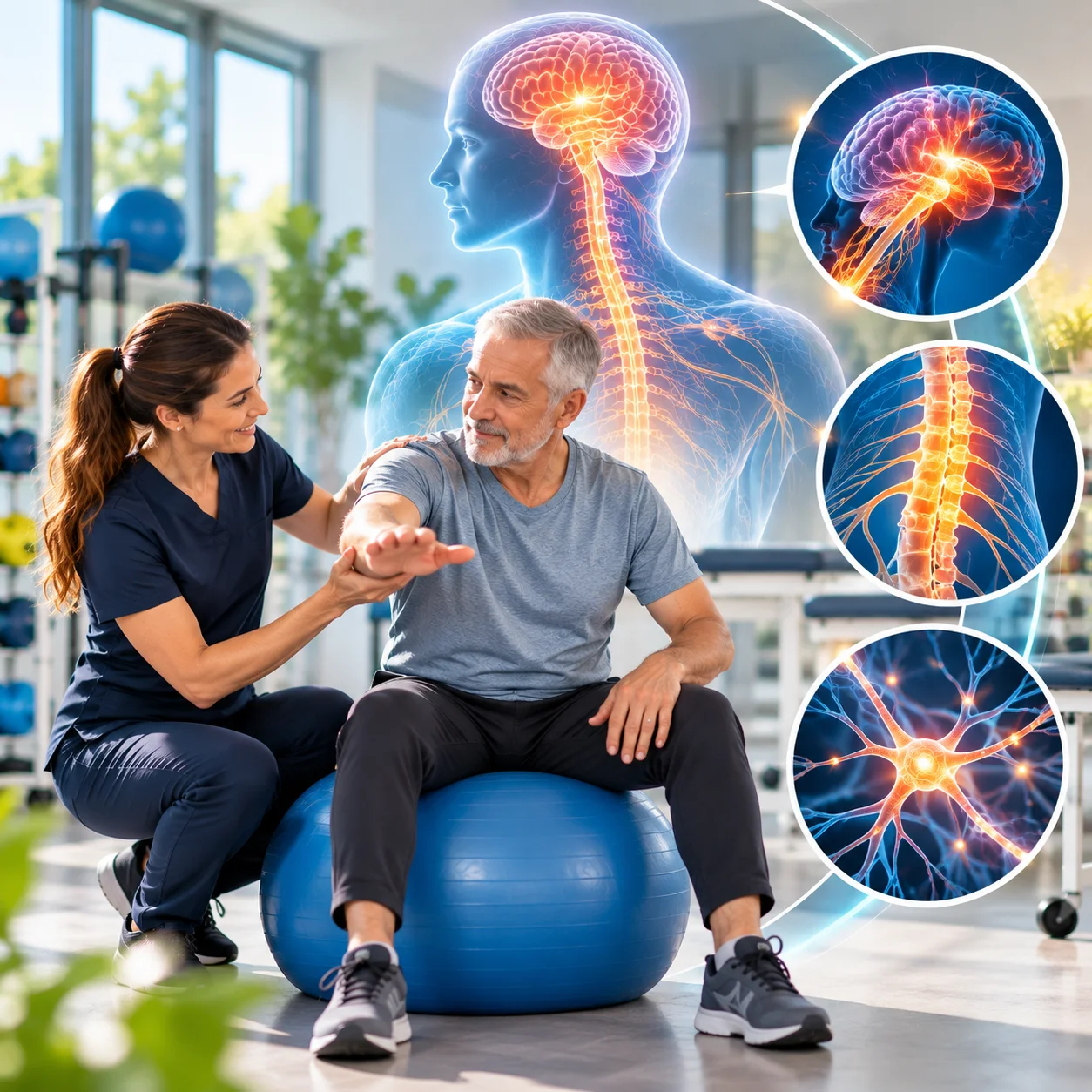
Neurological physiotherapy focuses on assessing and managing individuals experiencing movement and functional challenges resulting from nervous system disruptions. This includes issues affecting the brain, spinal cord, and peripheral nerves throughout the body.
When nerve communication lines break down, it can alter muscle tone, decrease physical strength, disrupt balance, and limit mobility. Our physiotherapists utilize structured physical interventions to encourage neuroplasticity, the nervous system’s capacity to reorganize its structure and functions in response to specific tasks and movement.
When is Neurological Physiotherapy in Calgary Recommended?
Disruptions to the nervous system manifest in diverse physical challenges. Our clinic helps individuals manage a wide range of nerve-related conditions, including:
Stroke
Addressing one-sided weakness, dropped foot patterns, and lost functional coordination.
Parkinson’s Disease
Managing tremors, limb rigidity, slow movements, and festinating (shuffling) walking patterns.
Multiple Sclerosis (MS)
Navigating changing fatigue levels, muscle spasms, and progressive muscle weakness.
Spinal Cord Injuries
Assisting with incomplete or complete spinal lesions to maximize remaining physical function and structural integrity.
Traumatic or Acquired Brain Injuries
Addressing cognitive-motor coordination issues, balance deficits, and structural physical patterns.
Cerebral Palsy
Helping children and adults manage atypical muscle tone, structural positioning, and developmental movement milestones.
Functional Neurological Disorder (FND)
Structuring physical strategies to address functional motor symptoms without structural pathology.
Balance and Gait Disorders
Correcting unstable walking patterns, frequent stumbling, and unsteadiness during positional changes.
Peripheral Neuropathy
Helping improve balance, walking ability, sensation awareness, and lower-limb function affected by nerve damage.
Bell's Palsy
Supporting facial muscle rehabilitation and improving facial movement through guided therapeutic exercises.
Vestibular Disorders
Managing dizziness, vertigo, motion sensitivity, and balance impairments through vestibular rehabilitation.
Guillain-Barré Syndrome (GBS)
Assisting with strength recovery, mobility, endurance, and functional independence during balance rehabilitation.
Amyotrophic Lateral Sclerosis (ALS)
Supporting mobility, balance, flexibility, energy conservation, and safe movement throughout disease progression.
Muscular Dystrophy
Helping maintain mobility, joint flexibility, muscle function, and participation in daily activities.
Post-Concussion Syndrome
Addressing persistent dizziness, balance deficits, neck dysfunction, coordination problems, and activity intolerance following concussion.
Foot Drop
Improving walking mechanics, lower-limb strength, balance, and gait efficiency through individualized functional rehabilitation.
Ataxia
Helping improve coordination, balance, posture, and movement control for individuals with cerebellar or neurological disorders affecting coordination.
Neurological Weakness Following Brain or Nerve Surgery
Supporting recovery of strength, mobility, balance, and functional movement after neurosurgical procedures.
Every Recovery Journey Is Different
Neurological rehabilitation is not based on a standard program. Recovery depends on the individual’s condition, symptoms, goals, and physical abilities.
Our physiotherapists perform a detailed assessment that may include:
- Walking Assessment: Evaluates walking pattern, speed, step length, and overall gait efficiency.
- Balance Assessment: Measures stability during standing, walking, and position changes to identify balance impairments.
- Functional Mobility Assessment: Evaluates a person’s capacity to safely carry out daily activities like sitting, standing, and walking.
- Coordination Testing: Examines how smoothly and accurately the arms and legs perform controlled movements.
- Muscle Strength Evaluation: Identifies areas of weakness that may affect mobility, posture, and daily activities.
- Range of Motion Assessment: Measures joint mobility to determine movement restrictions and flexibility limitations.
- Postural Assessment: Evaluates spinal alignment, body positioning, and weight distribution during sitting and standing.
- Flexibility Assessment: Identifies tight muscles and soft tissue restrictions that may limit movement.
- Transfer Ability Assessment: Evaluates the ability to move safely between positions, such as from bed to chair or sitting to standing.
- Fall Risk Evaluation: Assesses factors that may increase the likelihood of falls and guides prevention strategies.
- Functional Activity Assessment: Observes how everyday tasks are performed to identify movement challenges affecting independence.
- Review of Daily Activity Limitations: Discusses difficulties with work, self-care, household tasks, and recreational activities to develop meaningful rehabilitation goals.
This information helps guide a rehabilitation program that matches each person’s current abilities.
Techniques Offered by Our Clinic
Our therapists conduct an extensive physical baseline evaluation to observe your active movement patterns, joint tracking, structural stability, and sensory reactions.
We offer hand therapy to preserve limited body parts' joint range of motion, control soft tissues, and lessen muscle spasticity.
We utilize targeted functional exercises to improve walking patterns, correct uneven weight distribution, and lower the risk of unexpected falls.
Our physiotherapists employ specific head, neck, and eye movement protocols to address dizziness, inner-ear imbalances, and spatial disorientation.
We offer structured exercise plans focused on muscle activation, cardiovascular stamina, and core stabilization to maintain long-term physical capacity.
For individuals returning to work or daily routines, we provide ergonomic recommendations and activity modifications that improve posture, reduce fatigue, and support safer movement throughout the day.
Massage therapy may help reduce muscle tension, improve circulation, promote relaxation, and prepare soft tissues for therapeutic exercise and functional rehabilitation.
Targeted strengthening exercises focus on improving muscle activation, endurance, and control in weakened muscle groups. Programs are progressed according to individual goals and functional abilities.
Poor posture can affect balance, breathing, and mobility following neurological injury. We develop individualized postural training programs that improve trunk control, spinal alignment, weight distribution, and overall movement quality during daily activities.
What Happens During Your Visits?
Every Neurological rehabilitation plan begins with understanding the individual’s needs.
During appointments, our physiotherapists will:
- Review current symptoms
- Monitor functional progress
- Adjust exercise programs
- Progress mobility activities
- Perform manual therapy when appropriate
- Introduce new balance exercises
- Provide movement education
- Review home exercises
- Discuss activity goals
Treatment programs continue to evolve as mobility and function improve.
Insurance and Direct Billing
Apollo Physiotherapy works with many extended health benefit providers to help make rehabilitation more accessible. Depending on individual coverage, direct billing may be available for eligible physiotherapy services.
Our administrative team can assist with:
- Verifying available insurance coverage
- Explaining direct billing options
- Answering questions about payment methods
- Providing information regarding treatment costs
- Discussing available funding pathways for eligible workplace or motor vehicle accident claims
If you have questions before your first appointment, our team is happy to help explain the available options.
Begin Your Neurological Rehabilitation Journey
Improving movement after a neurological condition often requires a personalized rehabilitation approach. At Apollo Physiotherapy, Neurological Physiotherapy in Calgary combines individualized assessment, therapeutic exercise, manual therapy, balance training, gait retraining, functional movement, and education to help improve mobility, confidence, and everyday function. Our clinic develops treatment plans around your goals to support greater independence and long-term recovery. Ready to get started? Contact Apollo Physiotherapy today to book your neurological physiotherapy assessment and begin your personalized rehabilitation plan.

Our Patients Share Their Journey
"I had an amazing experience with Apollo Physiotherapy.The receptionist was super friendly and made booking my appointment a breeze. The physiotherapist knowledgeable, helpful, and took the time to explain everything clearly. They really listened to my concerns and created a personalized treatment plan that worked wonders. Highly recommend!ਅਸਾ ਨੂੰ ਮਾਣ ਹਰਮਨ ਵੀਰ ਤੇ ⭐️⭐️⭐️⭐️⭐️"I m still his supervision &recovering from my injuries and Harman singh is like red bull energy booster gives you the wings 🪽 to fly.Thanks to all
AVNINDER SINGH SANGHERA
I had such a positive experience at Apollo Physiotherapy. Ramesh really took the time to understand my issues and made me feel heard. His approach was so personal, and I could tell he genuinely cared about helping me get better. The assistants were also great—super friendly and made sure I was comfortable throughout my sessions. I’m already feeling so much better, and I’m grateful for the care I received. Would definitely recommend!
Noor Kaur
I recently had the pleasure of receiving treatment from Ramesh Bimagani at Apollo Physiotherapy (Cityscape) and I can confidently say it was a fantastic experience. From the moment I walked into the clinic, the atmosphere was welcoming and professional. Ramesh Bimagani took the time to thoroughly assess my condition and explain the treatment plan in detail. Their expertise and attentive care significantly improved my mobility and reduced my pain. They were always patient, encouraging, and responsive to my questions. I highly recommend Ramesh Bimagani at Apollo Physiotherapy (Cityscape) to anyone in need of effective and compassionate physiotherapy.
Harjinder Sandhu
Meet the Team Supporting Your Neurological Rehabilitation
Throughout every phase of neurological rehabilitation, our interdisciplinary team is dedicated to providing individualized care that promotes mobility, function, and confidence.

Clinic Director & Physical Therapist
Physical Therapist & Clinic Director
With over 15 years of physiotherapy experience, Ramesh provides compassionate, patient-focused care. He is committed to helping individuals improve mobility and function while supporting their rehabilitation goals through personalized treatment and ongoing professional development.

Vaidarbhi Patel
Physical Therapist
Vaidarbhi combines clinical experience with a thoughtful approach to rehabilitation. She works closely with individuals experiencing neurological movement challenges, creating personalized treatment plans that encourage functional recovery, confidence, and improved participation in daily activities.

Harmandeep Singh
Physical Therapist
Harmandeep incorporates manual therapy, therapeutic exercise, functional assessment, myofascial release techniques, taping, and patient education to support rehabilitation. His goal is to help individuals improve movement while encouraging long-term physical function and injury prevention.

Yenny Bernice
Massage Therapy
Yenny provides therapeutic massage services that complement physiotherapy programs. To promote general physical well-being, she has experience with therapeutic massage, sports massage, trigger point therapy, myofascial release, and deep tissue massage, and relaxation massage.

Janki Devi
Physical Therapist
Janki delivers individualized massage therapy with a caring and professional approach. She focuses on creating a comfortable environment while tailoring each session to individual needs, helping clients feel supported throughout their rehabilitation journey.
Frequently Asked Questions
Vestibular and Balance Rehabilitation
Yes. Surgical removal of an acoustic neuroma often damages the vestibulocochlear nerve, leading to severe asymmetry in balance inputs. Our vestibular rehabilitation utilizes customized adaptation and habituation exercises to train your brain to rely on remaining signals, significantly improving gaze stability and spatial orientation.
Foot drop results from weakness in the anterior tibialis muscle due to disrupted brain pathways. Our gait retraining focuses on neuroplasticity exercises to stimulate dorsiflexion, coupled with manual therapy to prevent ankle joint stiffness, helping you achieve a safer, more natural walking pattern.
Yes. Freezing of gait often occurs during environmental transitions or turning. Our balance retraining incorporates external visual and auditory cueing strategies that bypass damaged basal ganglia pathways, teaching your nervous system alternative neural routes to initiate and maintain stepping movements safely.
While standard repositioning maneuvers treat peripheral inner ear crystals, central vertigo stems from brainstem or cerebellar issues. Our vestibular therapy addresses this by utilizing progressive habituation protocols and gaze-stabilization tracking, forcing the central nervous system to recalibrate its visual and balance processing systems.
Cerebral ataxia disrupts movement coordination, causing wide-based, uncoordinated steps. Our gait retraining incorporates heavy sensory feedback, core stabilization, and deliberate foot placement drills. These exercises maximize proprioception, your body's awareness of its position, helping to dampen erratic coordination and stabilize your walking path.
Concussions often disrupt the vestibulo-ocular reflex, causing headaches and nausea during reading or on screens. We implement targeted visual-vestibular tracking drills to systematically retrain coordinated eye-and-head movements. This gradually desensitizes your nervous system and restores comfortable, blur-free tracking for everyday tasks.
Multiple Sclerosis can disrupt nerve pathways controlling the pelvic floor, degrading core stability and postural control. Our pelvic floor therapy rebuilds deep foundational strength and coordinates muscle activation with your diaphragm, providing the stable physical base necessary to improve sitting and standing equilibrium.
Yes. Peripheral neuropathy reduces vital sensory feedback from the soles of your feet. Our balance retraining teaches your body to utilize compensatory sensory systems, relying more heavily on visual tracking and vestibular inputs to navigate uneven surfaces safely and reduce your risk of falling.
Motion sensitivity occurs when your brain receives conflicting data from your eyes, inner ears, and muscles. Our therapists utilize graded habituation exercises, carefully exposing your system to controlled movement triggers. This repeated, gentle exposure trains your brain to process motion signals without triggering dizziness or nausea.
Yes. Circumduction occurs when a stroke survivor swings their leg outward to clear the ground. Our gait retraining targets hip hiker muscles and knee flexors through focused motor relearning, breaking down the abnormal pattern to restore linear leg progression and improve overall walking efficiency.
Neurological Programming
Post-concussion syndrome involves persistent physical, visual, and cognitive issues. Our concussion management introduces a structured recovery plan, including controlled sub-symptom exercise testing, visual tracking retraining, and pacing strategies to safely rebuild your brain’s metabolic tolerance without triggering a return of your symptoms.
For progressive MS, exercise prescriptions are built around energy conservation and strength maintenance. We design custom routines focusing on low-impact resistance training and functional core stabilization, carefully balancing intensity and rest periods to prevent overheating and maximize your physical capacity throughout the day.
In incomplete spinal lesions, neurogenic bladder can cause distressing urinary urgency or retention. Our specialized pelvic floor therapy trains individuals to voluntarily coordinate, relax, or strengthen their deep pelvic muscles, optimizing outlet resistance and working alongside medical strategies to improve bladder management.
Post-surgical rehabilitation begins with a comprehensive physical assessment of your remaining motor function. Our therapists create a structured plan focusing on early mobility, addressing single-sided weakness through task-specific training, protecting healing incisions, and steadily rebuilding your cardiorespiratory stamina for safe daily living.
Our chiropractic adjustments focus on addressing structural imbalances caused by uneven weight bearing after a stroke. By delivering gentle, targeted alignments to affected joints, we resolve painful joint tracking issues and reduce the physical strain placed on your unaffected side during daily activities.
Dystonia causes painful, sustained muscle twisting and spasms. Our registered massage therapists use slow, calming strokes and rhythmic compression to sedate overstimulated muscle receptors. This tactile feedback provides significant temporary relief from deep, exhausting muscle aches and promotes systemic relaxation.
Concussions can disrupt the autonomic nervous system, causing your heart rate to spike unpredictably. Our management incorporates strictly monitored, heart-rate-guided aerobic exercise protocols. By training at precise, safe intensities, we help your brainstem gently recalibrate its cardiovascular control systems over time.
Charcot-Marie-Tooth disease causes muscle wasting, high arches, and unstable ankles. We design custom-fit orthotics using a precise mould of your feet to evenly distribute weight across your soles, support the collapsing ankle structures, and reduce the risk of rolling your ankles during daily walking.
While exercise cannot stop ALS progression, tailored, non-fatiguing prescriptions are crucial. We design gentle stretching and light, low-resistance active movements to prevent painful joint contractures, maintain your current respiratory capacity, and maximize your functional independence without overworking or tiring muscle fibres.
Neurological conditions can compound postpartum pelvic weakness, leading to severe prolapse or incontinence. Our targeted pelvic floor therapy utilizes biofeedback and tailored coordination exercises to strengthen damaged or weak muscles, restoring essential support for your internal organs and improving control over bladder functions.
Treatment Planning and Systemic Considerations
We do not use hydrotherapy because it limits our ability to track real-world gravitational balance. Our clinic prioritizes land-based gait and balance retraining, which forces your nervous system to adapt directly to everyday ground forces, resulting in more reliable, functional safety improvements at home.
Your initial neurological assessment takes approximately one hour. This dedicated time allows our physiotherapists to safely perform comprehensive motor, sensory, balance, and visual tracking tests, ensuring we identify all your physical needs before crafting your customized treatment plan.
Yes. Combining these therapies is highly effective. Our physiotherapists often utilize acupuncture or dry needling first to calm hypertonic muscles and reduce localized nerve pain, making the subsequent manual joint mobilization and stretching significantly more comfortable and effective.
Frequency depends on your current recovery stage and fatigue tolerance. Initially, we often recommend two to three sessions per week to build consistency and take advantage of early neuroplastic healing. As you gain strength and independence, we transition you toward a home-based maintenance routine.
Yes. If your nerve injury is the result of a motor vehicle accident, we bill your auto insurance provider directly. Our administrative team handles the paperwork and treatment plans, allowing you to focus entirely on your physical rehabilitation without financial stress.
Yes. Our services work together collaboratively. Our physiotherapists focus on your motor retraining, muscle balance, and functional gait patterns, while our chiropractic team addresses specific joint alignment issues, providing a comprehensive approach to your recovery.
We use objective, standardized physical outcome measures, like computerized balance readouts, functional reach distances, and the Timed Up and Go test. Re-evaluating these metrics every few weeks provides clear, visual proof of your physical improvements.
Yes. While early intervention is ideal, the brain maintains its capacity for neuroplasticity throughout your life. Chronic stroke survivors can absolutely learn new compensatory movement strategies, improve their balance control, and regain functional independence with targeted, consistent physical training.
We recommend wearing loose, comfortable athletic clothing and supportive, flat-soled walking shoes. This allows our therapists to easily examine your joint movements, place acupuncture needles safely, and ensure your stability during active balance and walking exercises.
Patient safety is our absolute priority. We utilize specialized physical support harnesses, secure transfer belts, and parallel bars during all balance and gait retraining, allowing our therapists to challenge your balance systems safely without any risk of a fall.
Hands-On Neurological Modalities
Spasticity causes involuntary, chronic muscle contractions that limit joint mobility. Our manual therapy applies targeted, slow, and sustained passive stretches to hypertonic muscle groups. This deep tissue feedback safely dampens overactive spinal reflexes, relaxing the muscle tissue and temporarily improving your functional range of motion.
Spinal manipulation is safely utilized after a thorough screening reveals no active joint inflammation or bone density issues. Our physiotherapists apply gentle, precise manual forces to restricted joints, which helps optimize spinal biomechanics, ease compensatory muscle tension, and support clearer postural signalling through the nervous system.
Chronic stroke spasticity often leads to dense fascial adhesions and shortened tendons, causing fixed contractures. Our certified therapists use specialized, stainless-steel Graston instruments to deliver targeted cross-friction to tight tissues, breaking down micro-scars and improving facial elasticity to expand active joint movement.
Yes. Cerebral palsy often produces chronic trigger points within hypertonic muscles. Our dry needling introduces fine, thin needles directly into these tight muscular bands, triggering a localized twitch response. This response immediately resets abnormal motor endplate activity, easing muscle tension and alleviating deep neurological discomfort.
Functional Neurological Disorder alters how the brain processes standard sensory signals. Our acupuncture treatments utilize fine needles stimulated at key anatomical points to provide a concentrated stream of benign sensory input. This process helps regulate central pain pathways and encourages healthier sensory-motor processing in the brain.
Parkinson's disease causes profound axial rigidity, stiffening the spine and limiting rotation. Our physiotherapists apply careful spinal manipulation to restricted vertebral segments, restoring joint play and reducing stiffness. This biomechanical improvement helps expand trunk rotation, making daily movements like turning over in bed much easier.
Brain injuries often trigger compensatory muscle guarding across the upper neck, leading to severe cervicogenic headaches. We utilize gentle manual traction and suboccipital soft-tissue mobilization to relieve compression of irritated occipital nerves, providing reliable relief from persistent, tension-driven head discomfort.
While Graston cannot repair a compressed nerve root, it can address secondary soft-tissue restrictions. When foot drop alters your walking pattern, the front leg muscles become tight and restricted. Instrument-assisted mobilization keeps these localized tissues pliable, maximizing your available range when nerve function recovers.
Yes. When an overactive, spasming piriformis muscle compresses the sciatic nerve, it radiates intense pain down the leg. Our dry needling precisely targets the deep fibres of the piriformis muscle, forcing it to relax completely, which removes direct physical pressure from the sciatic nerve and eases shooting discomfort.
Following a peripheral nerve injury, localized tissue inflammation can stall healing. We use acupuncture needles around the pathway of the affected nerve to boost local microcirculation, bring healing nutrients to the site, and modulate localized pain pathways, helping to create an ideal environment for nerve recovery.
Workplace, Occupational, and Environmental Adaptations
Parkinson's tremors and rigidity make standard computer tasks difficult. Our work ergonomics evaluation modifies your workstation by introducing specialized support surfaces, optimizing monitor heights, and recommending specific mouse interfaces. These changes reduce physical fatigue, protect your joints, and keep you working comfortably and productively.
A Functional Capacity Evaluation provides an objective, data-driven assessment of your physical abilities. We measure your lift tolerances, balance stability, and fine motor coordination under stress, matching your current physical capabilities against your specific job duties to determine a safe, reliable return-to-work timeline.
Yes. Poor posture compresses the nerves travelling from your neck to your arm. Our ergonomics service adjusts your desk, chair, and keyboard positions to take the physical pressure off your shoulder girdle, opening up the thoracic outlet and preventing nerve irritation during long office days.
Insurance providers require objective proof of physical limitations. Our evaluation uses standardized physical testing to document exact deficits in your endurance, positional tolerance, and motor planning. This provides clear, undeniable documentation to support your ongoing rehabilitation funding and long-term recovery needs.
Chronic radiculopathy causes sharp nerve pain to travel down your arm or leg during prolonged sitting. We adjust your seating setup to incorporate optimal lumbar support, alter your hip angles, and set up mandatory movement intervals, which take direct mechanical pressure off the compressed spinal nerve roots.
While we do not perform on-road testing, our evaluation measures your leg reaction times, upper body grip strength, and neck rotation. These physical metrics provide your medical team with the objective data needed to determine if you require specialized mechanical driving modifications.
Progressive MS causes profound physical fatigue and muscle weakness. We evaluate your home or office workflow, rearranging high-use items into a tight, accessible zone, recommending lightweight tools, and setting up energy-saving setups that significantly reduce daily physical strain and conserve your energy.
Yes. Repetitive wrist bending pinches the median nerve. Our ergonomic training corrects your typing posture, ensures your forearms stay parallel to the floor, and introduces resting splints. This setup minimizes pressure within the carpal tunnel, allowing the inflamed nerve to rest and heal.
For vestibular conditions, our evaluation measures your stability on shifting surfaces, tracks head-movement tolerances during physical tasks, and assesses your balance in busy visual environments, ensuring you can safely return to active work environments without experiencing dangerous vertigo.
We modify your workplace by analyzing wheelchair accessibility, adjusting desk heights, and installing specialized keyboard trays. These changes eliminate awkward reaching patterns, protect your upper joints from repetitive strain injuries, and allow you to navigate your work day with complete independence.