
Whiplash Physiotherapy Calgary
Find support for your recovery with personalized physiotherapy that fits your lifestyle.
- Covered under Section B after a collision
- Same-day assessment available
- Physio, chiro and massage on one claim
- No referral needed
Book an Appointment
Whiplash Physiotherapy Calgary for Neck Pain and Recovery
Helping you return to work, driving, and daily life with greater comfort.
A sudden collision, sports injury, or unexpected impact can place considerable stress on the muscles, joints, and ligaments of your neck. While some symptoms appear immediately, others may develop gradually over the following hours or days, affecting your ability to work, drive, sleep, or complete everyday activities. At our clinic, we provide Whiplash Physiotherapy in Calgary through individualized rehabilitation plans designed around your symptoms, functional goals, and lifestyle. We help restore movement, improve neck function, reduce stiffness, and support your recovery using evidence-informed physiotherapy techniques that encourage safe, progressive healing.
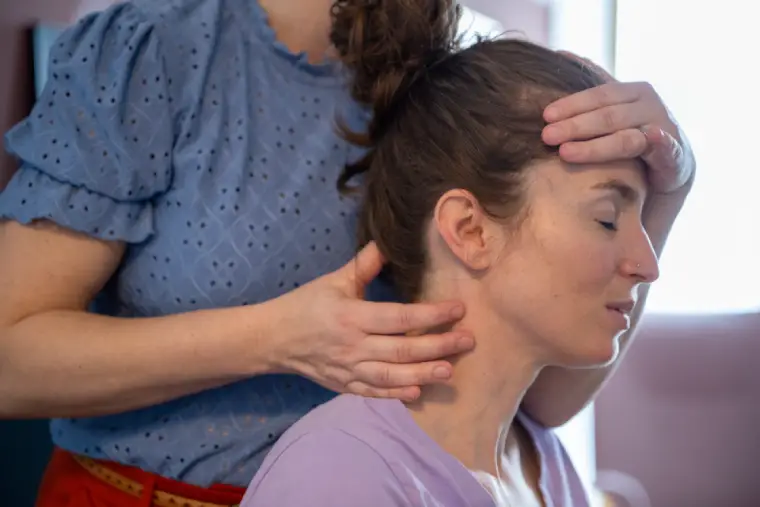
What Happens During a Whiplash Injury?
A whiplash injury occurs when a sudden, rapid force causes the head and neck to move forward and backward in a whip-like motion. This injury mechanism is most commonly associated with motor vehicle collisions, but it can also occur during sports impacts, slips, trips, or workplace mishaps. The rapid energy transfer places tremendous stress on multiple cervical spine structures at once.
Symptoms can range from mild discomfort to significant limitations in daily activities and may not always appear immediately after the injury.
Common symptoms include:
- Neck pain and stiffness
- Reduced neck mobility
- Shoulder or upper back discomfort
- Headaches beginning at the base of the skull
- Muscle tightness
- Difficulty turning the head
- Fatigue
- Dizziness in some individuals
- Jaw discomfort
- Difficulty maintaining comfortable sitting or driving positions
Early physiotherapy for whiplash can help address movement restrictions and support recovery before compensatory movement patterns develop.
Could Physiotherapy Help After a Whiplash Injury?
Every whiplash injury affects the body differently. Some individuals recover within weeks, while others continue experiencing stiffness, reduced mobility, or recurring symptoms for several months.
At our clinic, Whiplash Physiotherapy in Calgary begins with a detailed physical assessment. Our whiplash physiotherapists evaluate your movement, posture, neck mobility, muscle function, and daily activity limitations before developing a personalized whiplash treatment program.
Our Whiplash rehabilitation plans aim to:
- Improve neck mobility
- Restore normal movement patterns
- Reduce muscular tension
- Improve flexibility
- Increase strength and stability
- Support posture
- Improve functional movement
- Help you gradually return to work, sports, and daily activities
Common Causes of Whiplash
Whiplash can occur in many situations involving sudden acceleration or deceleration forces
Rear-end collisions are among the most common causes of whiplash injuries. Side-impact and head-on collisions can also create rapid neck movements that strain muscles, ligaments, and other soft tissues.
Contact sports and high-impact recreational activities may expose the neck to rapid movement, collisions, tackles, or falls that result in whiplash.
Unexpected falls can cause sudden neck movements that strain soft tissues, especially if the head snaps forward or backward during the fall.
Physical occupations involving falls, impacts, heavy equipment, or unexpected forces may contribute to whiplash injuries.
Cycling, skiing, skating, horseback riding, and other recreational activities may occasionally result in neck trauma from falls or collisions.
A forceful blow, shove, or impact to the head or upper body during an assault may cause the neck to move abruptly, resulting in a whiplash injury.
High-speed roller coasters and other amusement rides can expose riders to rapid acceleration and deceleration forces that place stress on the neck.
Improper diving or an unexpected impact with the water or pool floor can cause sudden neck movement and soft-tissue injury.
Being struck on the head or shoulders by a falling object can create a sudden force that causes the neck to whip forward or backward.
Unexpected jolts, impacts, or sudden stops while operating or riding industrial machinery, construction equipment, or agricultural vehicles may contribute to whiplash.
Pedestrians and cyclists involved in collisions with vehicles or fixed objects may experience rapid neck acceleration and deceleration, increasing the risk of whiplash.
Although less common, abrupt forces during everyday activities, such as being unexpectedly pushed, catching a heavy falling object, or experiencing a sudden stop while riding public transportation, can occasionally result in whiplash symptoms.
How We Approach Whiplash Rehabilitation
Recovery involves more than simply resting the neck. Our whiplash physiotherapists focus on restoring movement while supporting appropriate tissue recovery.
Comprehensive Physical Assessment
Your physiotherapist begins by reviewing:
- Injury history
- Symptoms
- Functional limitations
- Neck mobility
- Joint movement
- Muscle strength
- Posture
- Movement quality
- Balance between mobility and stability
This information guides your individualized rehabilitation program.

Our Complete Selection of Therapeutic Techniques
To ensure every aspect of your recovery is fully addressed, our clinic utilizes a diverse selection of evidence-based modalities and hands-on techniques. Our physiotherapists combine these interventions to match your changing symptom patterns and support your physical rehabilitation.
Our therapists use precise, hands-on methods to alleviate deep tissue tension, encourage tissue elongation, and normalize joint mechanics:
- Soft Tissue Massage: Focuses directly on tight paraspinal muscle groups to optimize local blood flow and soothe hyperactive muscle tissues.
- Deep Tissue Massage: Targets the deeper muscle layers to address chronic tension patterns and minimize tissue restrictions.
- Trigger Point Therapy: Minimizes localized, painful muscle knots that limit your daily movement and radiate discomfort to other areas.
- Cross Fibre Friction: Applies focused, transverse pressure across healing ligaments and tendons to prevent dense adhesions and encourage organized fibre realignment.
- Myofascial Release: Eases broad structural restrictions in the fascial sheets enveloping your neck and shoulder muscles, reducing systemic tightness.
- Spinal Manipulation: Applied by trained therapists using precise, gentle force to specific cervical or thoracic joints to restore normal movement patterns and ease localized stiffness.
When pain signals are highly elevated, we utilize targeted modalities to assist in soothing the nervous system and improving tissue healing rates:
- Acupuncture: Involves inserting fine needles into specific anatomical points to promote localized circulation, ease muscle tension, and stimulate the release of natural regulatory hormones.
- Dry Needling: Targets deep muscular trigger points and hyper-irritable bands to safely deactivate painful muscle spasms and restore normal muscle length.
- TENS (Transcutaneous Electrical Nerve Stimulation): Delivers gentle electrical impulses to the skin's surface to intercept and block pain signals before they reach the brain.
- Ultrasound Therapy: Uses targeted sound waves to generate strong thermal effects, promoting cellular repair and soothing irritated soft tissues.
- Interferential Therapy: Utilizes crossing low-frequency electrical currents to manage deeper tissue swelling, improve circulation, and alleviate stubborn discomfort.
True long-term recovery depends heavily on restoring active physical capacity and structural support:
- Cervical Traction: Gently decompresses the cervical spine, opening up the disc spaces and taking pressure off irritated nerve roots to provide immediate physical relief.
- Proprioception and Balance Exercises: Special coordination drills designed to train the tiny movement receptors in your neck, restoring accurate communication between your eyes, inner ear, and cervical joints to address dizziness.
- Exercise Prescriptions: Tailored movement plans designed by our professionals consisting of specific stretching, deep stabilization, and postural correction exercises that you can practice safely at home.
- Concussion Management & Vestibular Rehabilitation: Integrated care pathways to address underlying mild traumatic brain injuries, visual tracking fatigue, and balance disorders that frequently occur alongside acceleration impacts.


Recovery timelines vary depending on each individual’s injury and response to rehabilitation.
What Can You Expect During Recovery?
Whiplash recovery is typically progressive rather than immediate.
Goals include:
- Restoring comfortable movement
- Gentle mobility
- Education
- Activity modification
Whiplash treatment often progresses toward:
- Improving flexibility
- Increasing muscle endurance
- Postural retraining
- Functional exercises
The focus shifts toward:
- Strengthening
- Functional movement
- Work-related activities
- Recreational activities
- Long-term neck health
When Should You Seek Neck Injury Physiotherapy?
Beginning rehabilitation early may help restore movement and improve overall function.
Early assessment is beneficial if you experience:
- Persistent neck stiffness
- Difficulty turning your head
- Headaches after an accident
- Shoulder pain following neck injury
- Reduced mobility
- Muscle tightness
- Difficulty returning to work
- Ongoing discomfort during daily activities
- Dizziness following a neck injury
Insurance, Section B and Direct Billing
Whiplash from a car accident: Alberta’s Section B benefits cover physiotherapy, chiropractic and massage for whiplash-associated disorders regardless of who was at fault. Within 90 days of the collision we bill your auto insurer directly under the treatment protocol — nothing to pay upfront. After 90 days, extended health is used first and the balance goes to your adjuster. Full details on our car accident physiotherapy page.
Whiplash from work: covered through WCB physiotherapy.
Whiplash from sport or a fall: billed to your extended health plan. We direct bill Alberta Blue Cross, Sun Life, Manulife, Canada Life and most other providers.
- Motor Vehicle Accident (MVA) claims
- WCB claims, where applicable
- Extended health benefit plans
- Direct billing with participating insurance providers
Take the Next Step in Your Recovery
Recovering from whiplash can feel challenging, but you do not have to go through it alone. Restoring your strength, mobility, and confidence takes a structured, personalized approach that supports your body’s natural healing process. If you are searching for Physiotherapy near me, our evidence-based, individualized rehabilitation programs are designed to help you recover safely and return to the activities that matter most.
At Apollo Physiotherapy, our team provides compassionate, structured care for Whiplash Physiotherapy in Calgary. Contact us today to schedule your comprehensive assessment and begin your recovery journey.
Meet Our Dedicated Hands-On Team

Ramesh Bimagani
Clinic Director & Physical Therapist
With over 15 years of physiotherapy experience, Ramesh is committed to personalized patient care and promoting healthier, active lifestyles through compassionate rehabilitation.

Vaidarbhi Patel
Physical Therapist
Vaidarbhi combines clinical experience with compassionate care, helping individuals improve mobility, restore function, and confidently return to everyday activities through personalized rehabilitation.

Harmandeep Singh
Physical Therapist
Harmandeep focuses on movement restoration through manual therapy, exercise, patient education, and functional rehabilitation while supporting injury prevention and long-term physical wellness.

Yenny Berenice
Massage Therapist
Yenny provides therapeutic massage tailored to individual needs, helping clients reduce muscle tension, encourage relaxation, and support overall physical well-being.

Janki Dev
Massage Therapist
Janki creates a welcoming environment by delivering personalized massage therapy with warmth, professionalism, and thoughtful care to support relaxation and overall wellness.

Our Patients Share Their Journey
I went to Apollo physiotherapy, Chiriopracticor and massage for shoulders, lower back and legs pain after a motor vehicle accident last June 2025. From the 1st time i went for assessment until the end of the treatments; I was welcomed by the dedicated team of physiotherapists, massage, Chiriopracticor and psychologist. The team work in the perfect harmony. They are ready to do everything they can to help you feel better. I was very happy to be under their care because They are very professional. I Will recommand everyone to go to Apollo physiotherapy, Chiriopracticor and massage for the best Traitements and have the same experience. Thanks to the entire team. Keep up with your amazing work!
Benelie Bisodi
I started visiting Ramesh Bimagani after a motor vehicle accident that caused pain in my shoulders and lower back. From the very first session, he was extremely professional, kind, and attentive. He took the time to understand my condition and explain everything clearly, which helped me feel confident and supported throughout the recovery process. Ramesh created a personalized treatment plan that focused on relieving my pain and improving mobility. His hands-on techniques and guided exercises made a huge difference — I could feel the improvement after just a few sessions. He’s patient, encouraging, and truly dedicated to helping his clients heal. Thanks to Ramesh, my shoulder and back pain have improved significantly, and I feel much stronger and more active again. I would highly recommend Ramesh Bimagani to anyone looking for an experienced and compassionate physiotherapist.
M Maan
I’ve been receiving treatment from Ramesh, PT, for several weeks following a motor vehicle accident, and I couldn’t be happier with the care I’ve received. Ramesh has been incredibly helpful in reducing my back and neck pain. He always takes the time to educate me on ways to prevent further injury, which I really appreciate. The front desk staff are equally friendly and professional, making each visit seamless and enjoyable. I highly recommend this clinic to anyone in need of physiotherapy. The team here genuinely cares about your well-being and goes above and beyond to help you recover! The front desk staff are equally friendly and professional, making each visit seamless and enjoyable. I highly recommend this clinic to anyone in need of physiotherapy. The team here genuinely cares about your well-being and goes above and beyond to help you recover! Ramesh created a personalized treatment plan that focused on relieving my pain and improving mobility. His hands-on techniques and guided exercises made a huge difference — I could feel the improvement after just a few sessions. He’s patient, encouraging, and truly dedicated to helping his clients heal. Thanks to Ramesh, my shoulder and back pain have improved significantly, and I feel much stronger and more active again. I would highly recommend Ramesh Bimagani to anyone looking for an experienced and compassionate physiotherapist.
Kiran Bal
Frequently Asked Questions
Whiplash Injury Mechanisms and Classifications
A whiplash injury occurs when a collision causes the head and neck to move rapidly backward and forward. This acceleration-deceleration motion can strain muscles, ligaments, facet joints, discs, and other cervical structures associated with whiplash.
Grade I whiplash involves neck pain, stiffness, or tenderness without significant physical findings. Grade II whiplash includes these symptoms along with musculoskeletal signs, such as restricted neck movement, reduced function, or identifiable tenderness.
Grade III whiplash may involve neurological signs. The collision-related forces can irritate cervical nerve structures, contributing to symptoms such as arm weakness, altered reflexes, numbness, tingling, or other changes in sensation.
Yes. Whiplash severity does not always correspond to visible vehicle damage. Factors such as body position, head position, direction of impact, restraint use, and whether a person anticipated the collision can influence force transfer.
Pre-existing arthritis, disc changes, previous injuries, or ongoing neck symptoms may influence recovery. A collision can aggravate existing limitations or make it more difficult to distinguish new whiplash-related symptoms from previous cervical concerns.
Rear-end, side-impact, and other collisions can create different movement patterns through the head, neck, and trunk. These varying forces may affect different cervical structures and contribute to different patterns of pain and functional restriction.
Yes. Some people experience immediate symptoms, while others notice increasing neck pain, stiffness, headaches, or movement difficulties later. Early muscle guarding and inflammatory responses may contribute to delayed symptom awareness after an accident.
Whiplash Symptoms and Associated Physical Changes
Whiplash can affect muscles, joints, and sensory structures in the upper cervical region. Irritation in these areas may contribute to headaches that begin near the neck or base of the skull and radiate toward the head.
Whiplash can affect cervical proprioception, which helps the brain interpret head and neck position. Altered sensory input may contribute to dizziness or unsteadiness, although other causes should also be considered during assessment.
Yes. Neck movement, sustained postures, headaches, dizziness, and altered head-position awareness can make reading or screen use more difficult. Some individuals may experience visual fatigue when symptoms are aggravated by prolonged positioning.
Remaining in one position during sleep may increase stiffness in sensitive neck tissues. After whiplash, reduced movement, muscle guarding, and sustained positioning can make the neck feel more restricted when first waking.
Some whiplash-associated disorders involve neurological symptoms, including tingling, numbness, or altered sensation. These symptoms require appropriate assessment because they may indicate irritation or involvement of cervical nerve structures.
Some individuals report increased sensitivity to light or noise following a collision. These symptoms may occur alongside headaches, dizziness, or other post-accident concerns and should be assessed within the broader clinical context.
Persistent pain, headaches, sleep disruption, and the effort required to manage symptoms can contribute to fatigue and concentration difficulties. These symptoms may also overlap with other conditions associated with a motor vehicle accident.
Yes. The forces involved in a collision may affect the neck and jaw region. Changes in muscle tension, head positioning, or associated trauma may contribute to jaw discomfort following a whiplash injury.
Whiplash Assessment and Early Evaluation
Whiplash can involve soft tissue and functional changes that may not be visible on standard imaging. X-rays and MRI are useful for specific structural concerns but may not explain every symptom experienced after a collision.
A whiplash assessment may include neck movement, pain response, muscle function, neurological signs, posture, balance, and functional limitations. Assessment findings help identify how the injury affects daily activities, work, driving, and movement.
Early assessment can help identify functional limitations, monitor symptoms, and guide appropriate activity progression. It also allows rehabilitation to be adjusted according to the individual's movement tolerance and recovery needs.
Recovery may be monitored through changes in neck movement, strength, symptom behaviour, activity tolerance, balance, and ability to complete work or daily tasks. Progress is evaluated over time rather than relying on imaging alone.
Manual Therapy for Whiplash Rehabilitation
Manual therapy may be used as part of a broader whiplash rehabilitation plan to address restricted movement, muscle guarding, or joint-related stiffness. Its use should be based on individual assessment findings and symptom tolerance.
Soft-tissue techniques may help address tenderness and protective muscle tension associated with whiplash. They are generally combined with movement and exercise strategies rather than used as the sole approach to rehabilitation.
Whiplash may contribute to upper cervical stiffness and discomfort near the base of the skull. Treatment may include appropriate manual techniques, gentle mobility work, and exercises designed around the individual's symptoms and tolerance.
Whiplash-related muscle guarding can contribute to localized tender or sensitive areas. Physiotherapy may address these areas through manual techniques, movement strategies, exercise, and gradual restoration of normal neck and shoulder function.
When appropriate, physiotherapists may use gentle joint mobility techniques to address movement restrictions following whiplash. The approach should be selected according to injury stage, symptoms, clinical findings, and individual tolerance.
Myofascial techniques may be used to address soft-tissue sensitivity and movement restrictions around the neck and shoulders. These techniques are typically incorporated into a broader rehabilitation program involving active movement and exercise.
No. Spinal manipulation is not appropriate for every whiplash presentation. A thorough assessment is necessary to identify potential contraindications, neurological concerns, symptom irritability, and whether another treatment approach is more suitable.
Treatment Options and Modalities for Whiplash
Dry needling may be considered when appropriate for persistent muscle tension or localized sensitivity following whiplash. Its suitability depends on the individual's presentation, treatment goals, medical history, and physiotherapist's clinical assessment.
Acupuncture may be used as an adjunct for some individuals experiencing persistent pain or muscle-related symptoms after whiplash. It should be integrated with active rehabilitation rather than replacing movement and functional recovery strategies.
TENS may provide temporary symptom relief for some people with whiplash-related pain. By helping manage discomfort, it may allow greater participation in movement, exercise, or other components of an individualized rehabilitation program.
Some clinics may use selected electrotherapy modalities as part of symptom management. Their role depends on the individual's presentation and should support, rather than replace, active rehabilitation and gradual functional recovery.
Passive modalities alone are generally not the complete focus of whiplash rehabilitation. Recovery commonly involves a combination of education, symptom management, graded movement, exercise, and progressive return to normal daily activities.
Movement, Exercise, and Physical Recovery After Whiplash
Appropriate movement can help prevent prolonged stiffness and support the gradual return of normal function. The amount and type of movement should be based on symptoms, injury severity, and individual tolerance.
Extended immobilization may not be appropriate for many uncomplicated whiplash injuries. Prolonged collar use can limit movement and contribute to stiffness, so recommendations should follow the guidance of the treating healthcare provider.
Deep neck flexor exercises may help restore muscular control and cervical stability following whiplash. These exercises are usually introduced and progressed according to the individual's symptoms, movement capacity, and stage of recovery.
Exercises may include controlled neck movements, cervical stabilization, upper back mobility, and shoulder exercises. The program should be individualized because the appropriate exercises depend on symptoms and functional limitations.
The neck and upper back work together during daily movement and posture. Improving thoracic mobility and shoulder function may support comfortable neck movement and help restore overall function following a whiplash injury.
When balance or dizziness is associated with whiplash, assessment may include cervical, vestibular, and visual components. Rehabilitation can then incorporate appropriate exercises based on the factors contributing to the individual's symptoms.
Pain and stiffness may lead people to avoid neck movement after an accident. A gradual rehabilitation program can progressively reintroduce movement and activity according to tolerance, helping restore confidence in everyday tasks.
Whiplash symptoms can vary considerably between individuals. A customized program can account for pain levels, movement restrictions, headaches, neurological symptoms, work demands, and activity goals instead of relying on generic exercises.
Whiplash and Return to Daily Activities
Return-to-work timing depends on symptoms, job demands, functional capacity, and recovery progress. Some people may benefit from modified duties or gradual exposure to physically demanding tasks while continuing rehabilitation.
Rehabilitation may gradually incorporate lifting, carrying, reaching, sustained postures, and other job-related activities. The goal is to improve tolerance for relevant tasks while monitoring how symptoms respond to increasing demands.
Driving may temporarily aggravate symptoms because it requires sustained posture, visual attention, and repeated head rotation. Comfort and safety should be considered, particularly when checking blind spots or responding quickly to traffic conditions.
Treatment may focus on restoring the movements and physical capacity required for sleeping, driving, working, exercising, and household tasks. Activity progression is adjusted according to symptoms and functional improvement.
Appropriate monitor height, seating, and work positioning may help reduce prolonged aggravating postures. Ergonomic changes can support rehabilitation by making it easier to maintain comfortable working positions while neck function improves.
Persistent Whiplash Symptoms and Ongoing Rehabilitation
Recovery can be influenced by injury severity, pain sensitivity, movement restrictions, sleep, stress, previous health concerns, and other individual factors. Persistent symptoms may require reassessment and adjustment of the rehabilitation approach.
Symptoms can vary as activity levels change. Physiotherapists may adjust exercise intensity, movement exposure, and treatment strategies based on symptom response while continuing to work toward gradual functional improvement.
Yes. Neck movement and headache symptoms do not always improve at the same rate. Ongoing assessment can help determine whether cervical factors or other post-accident concerns may be contributing to persistent headaches.
Persistent dizziness may require further assessment of cervical, vestibular, visual, and other contributing factors. Rehabilitation can then include appropriate balance, gaze, head-movement, or cervical exercises based on clinical findings.
Reassessment may be appropriate when symptoms worsen significantly, new neurological symptoms develop, progress stops, or daily function continues to decline. Changes in symptoms can indicate the need to modify the rehabilitation approach.
Functional recovery may involve improved neck movement, strength, activity tolerance, and confidence during daily tasks. The ability to work, drive, exercise, and complete regular activities with manageable or resolved symptoms is also considered.